Columbia Tenn
Dec 28th 1864

Dear Sister,

I received a long letter from you today. I reply not because there is anything of importance transpiring just at present, but because when the most happens is the time I am entirely unable to write. Since I was last at Columbia we have had some stirring times. Hood drove us back to Nashville. We had a very severe battle at Franklin during which our Regiment lost in killed wounded & captured some thing over half its men. After that we were in the big fight at Nashville & our company lost its Commanding Officer, a fine man who was shot through the breast & had an arm broken by a musket ball. But the success atoned for all the loss & more. John Bell HoodHood has halted at Columbia again. The rest of the Army has gone down after Hood. How long we shall remain here idle I know not but presume we shall have plenty to do. Sherman has taken Savannah & Hardee has escaped with his 15,000 men & will probably reinforce Hood which will give him a chance to show us considerable fight. But we shall conquer in the end. The right will triumph in the end. Charleston will be taken next and all important Sea ports. Christmas is over & I thought often of the fine times you were having at home. We had rather hard times living on hard tack & sow belly. It is quite cold to night, I have just had an argument on Slavery with the Captain who is for allowing the slaveholders credit for honesty on account of early education and I am not. I would just as — take a horse or hoe from one of these men as not. But I must stop writing. Having passed safely through the Battle of Franklin I expect good times for a while. Let me know if any thing new happening and you hear from Thomas.
Goodbye.
Your Bro. A.M.Weston

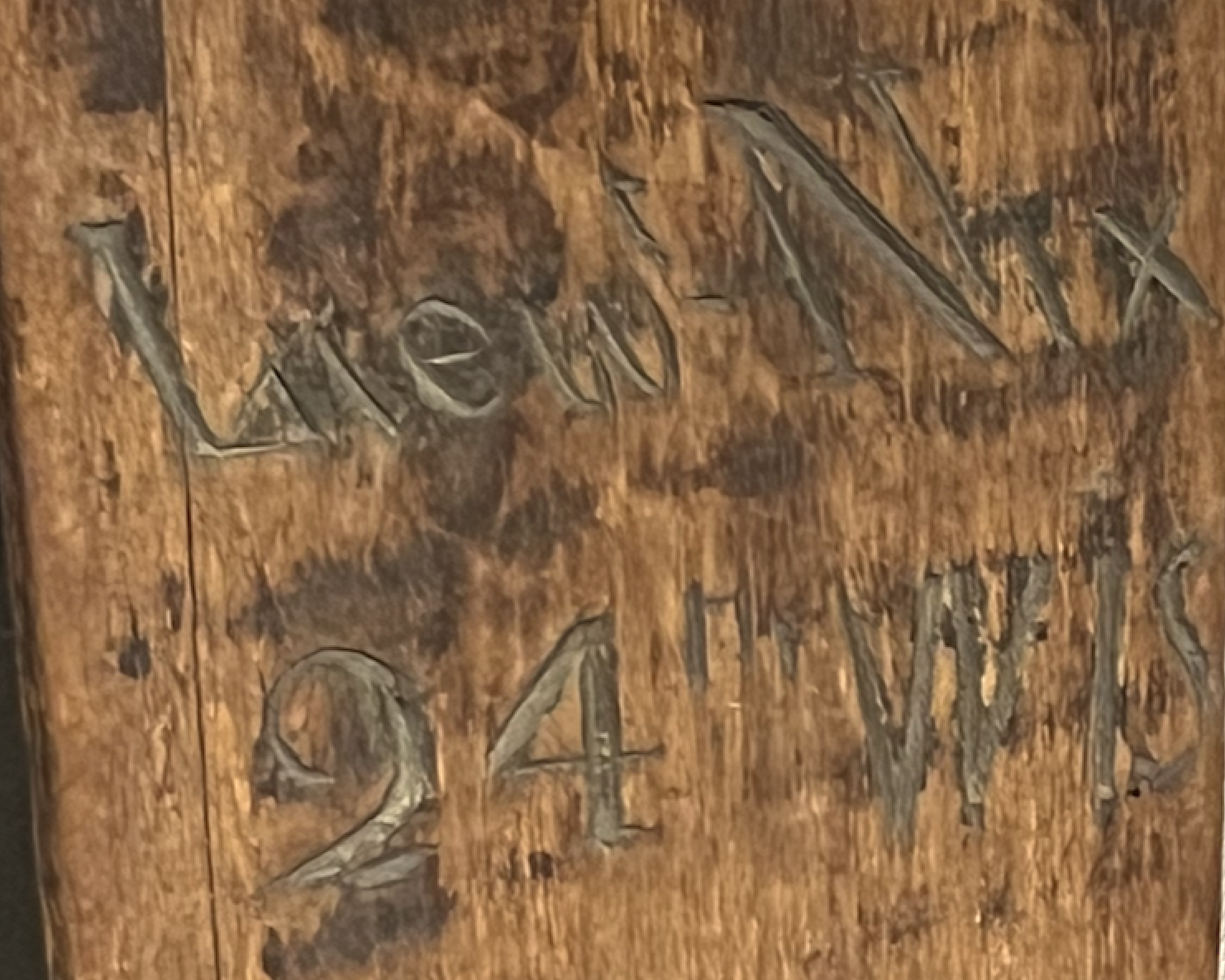
Asa M. Weston enlisted on 8/11/62 as Sergeant in Company K, 50th Ohio Infantry. He survived the Civil War.

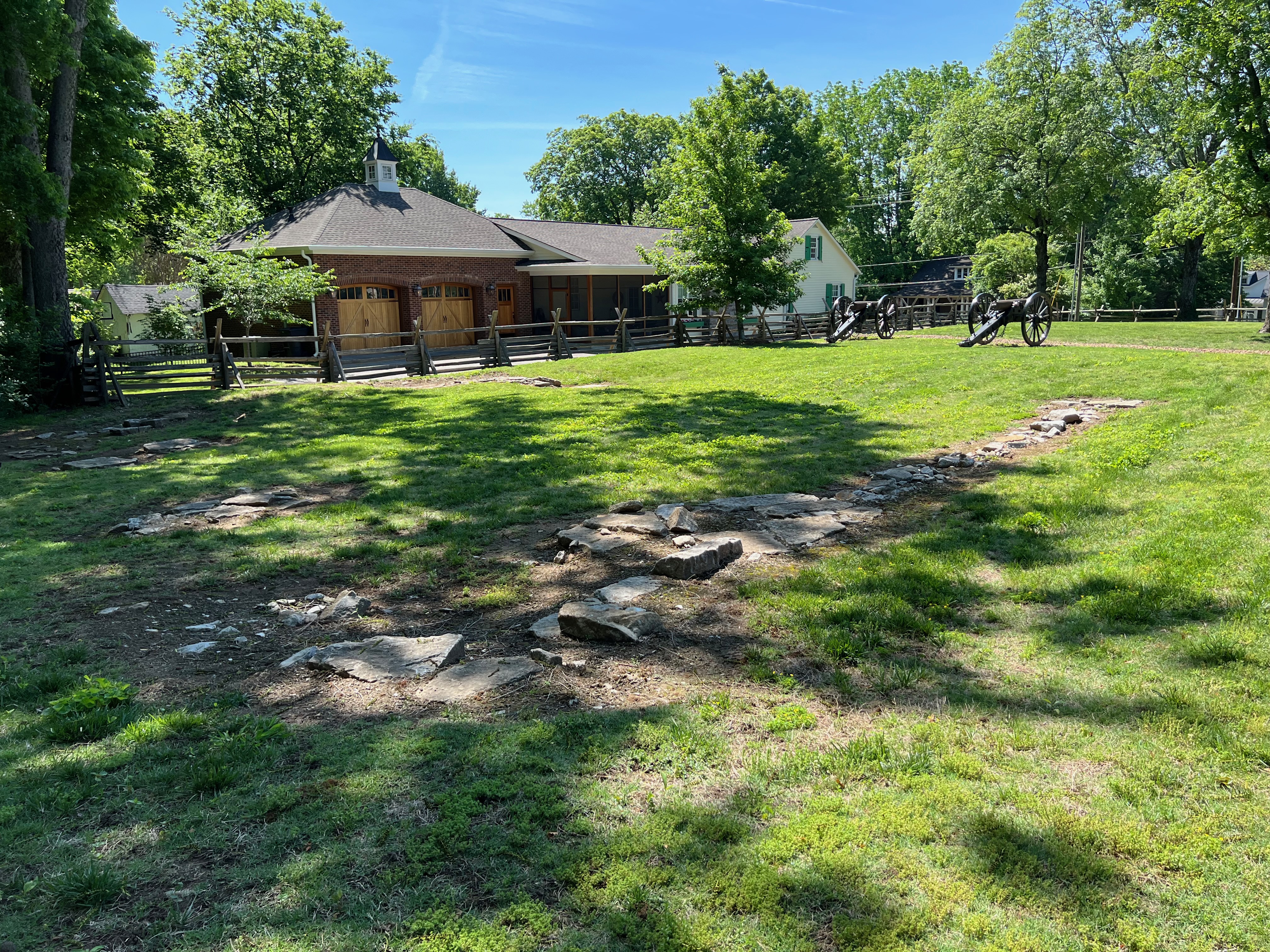
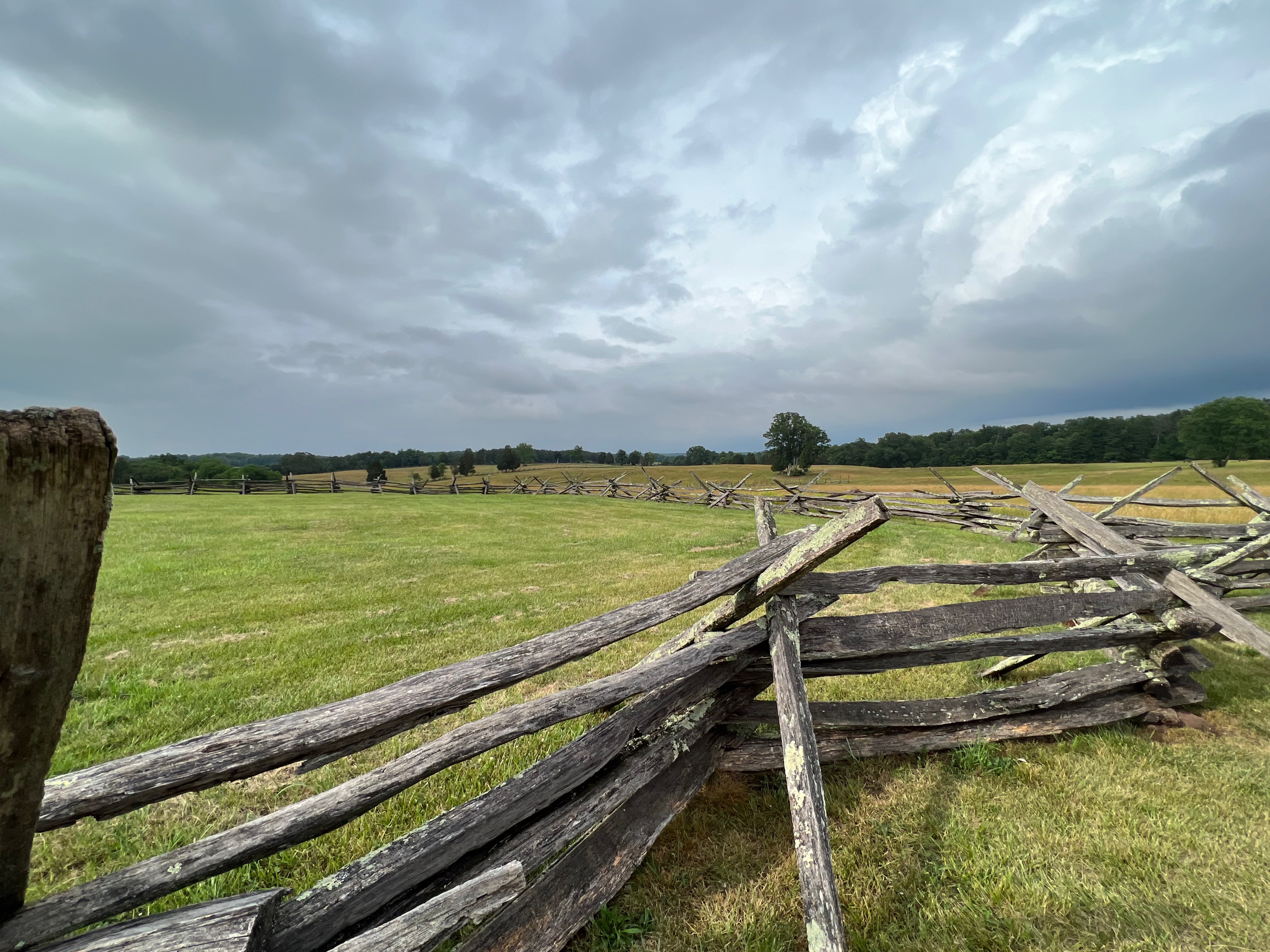
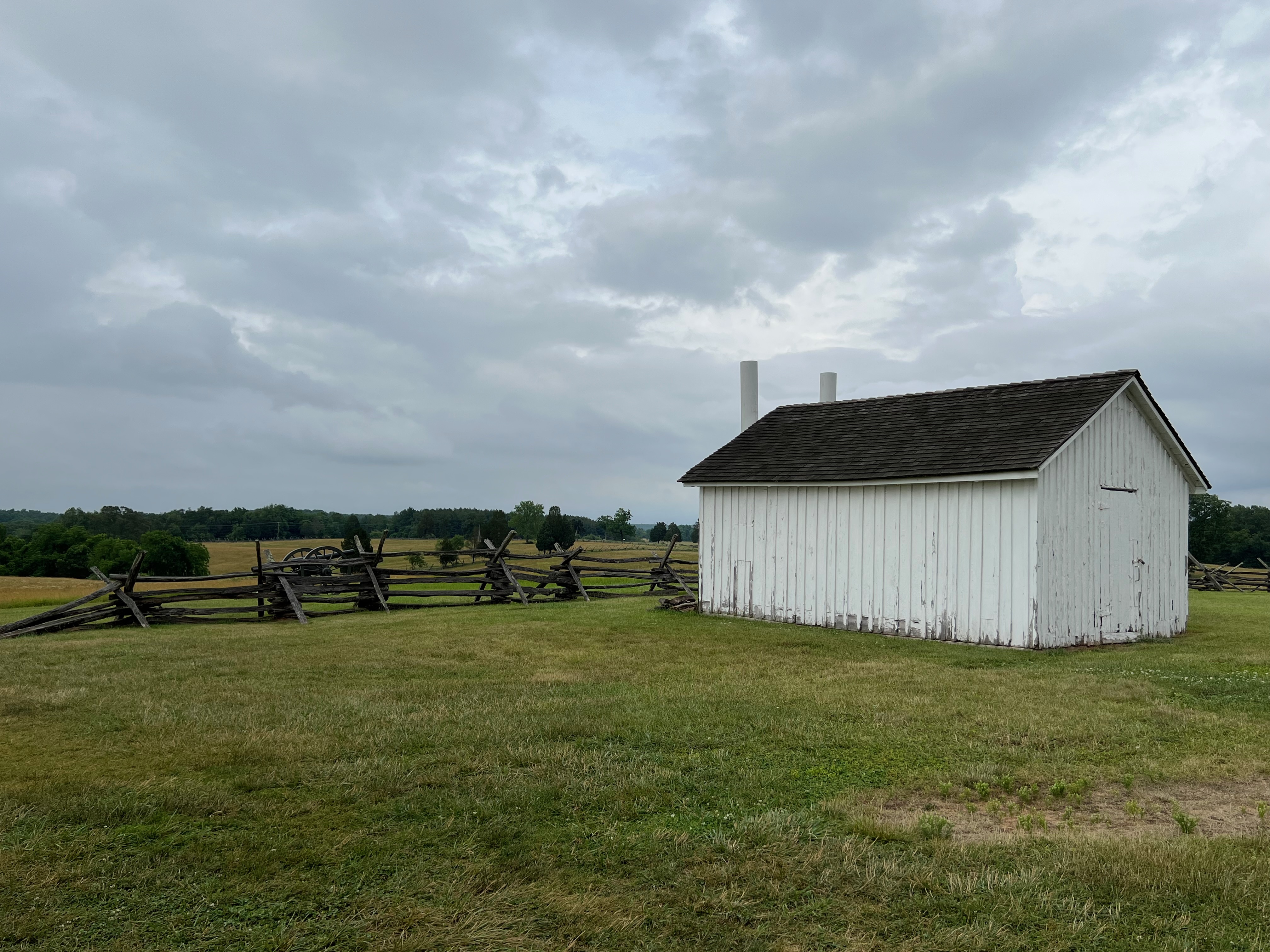
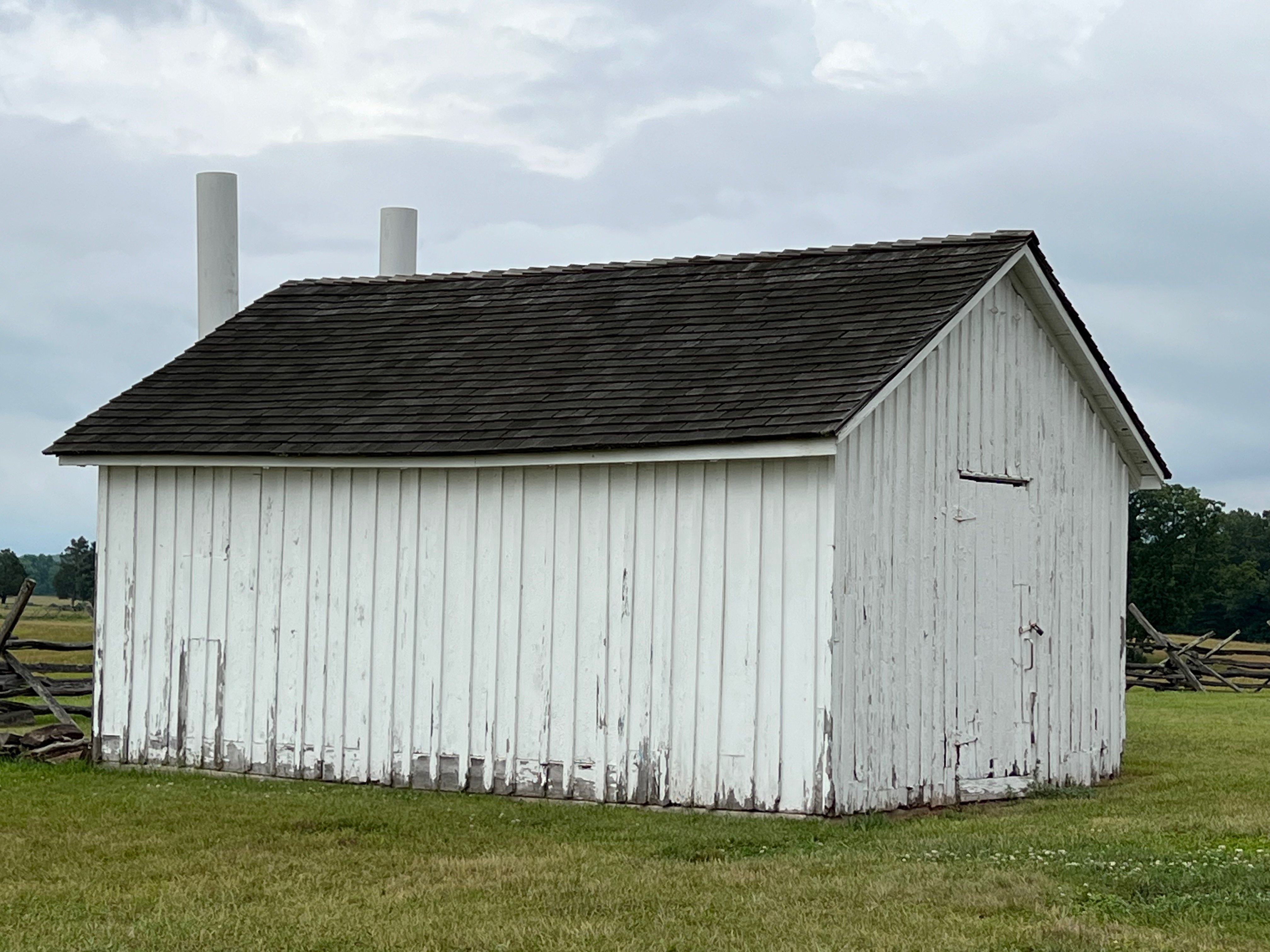
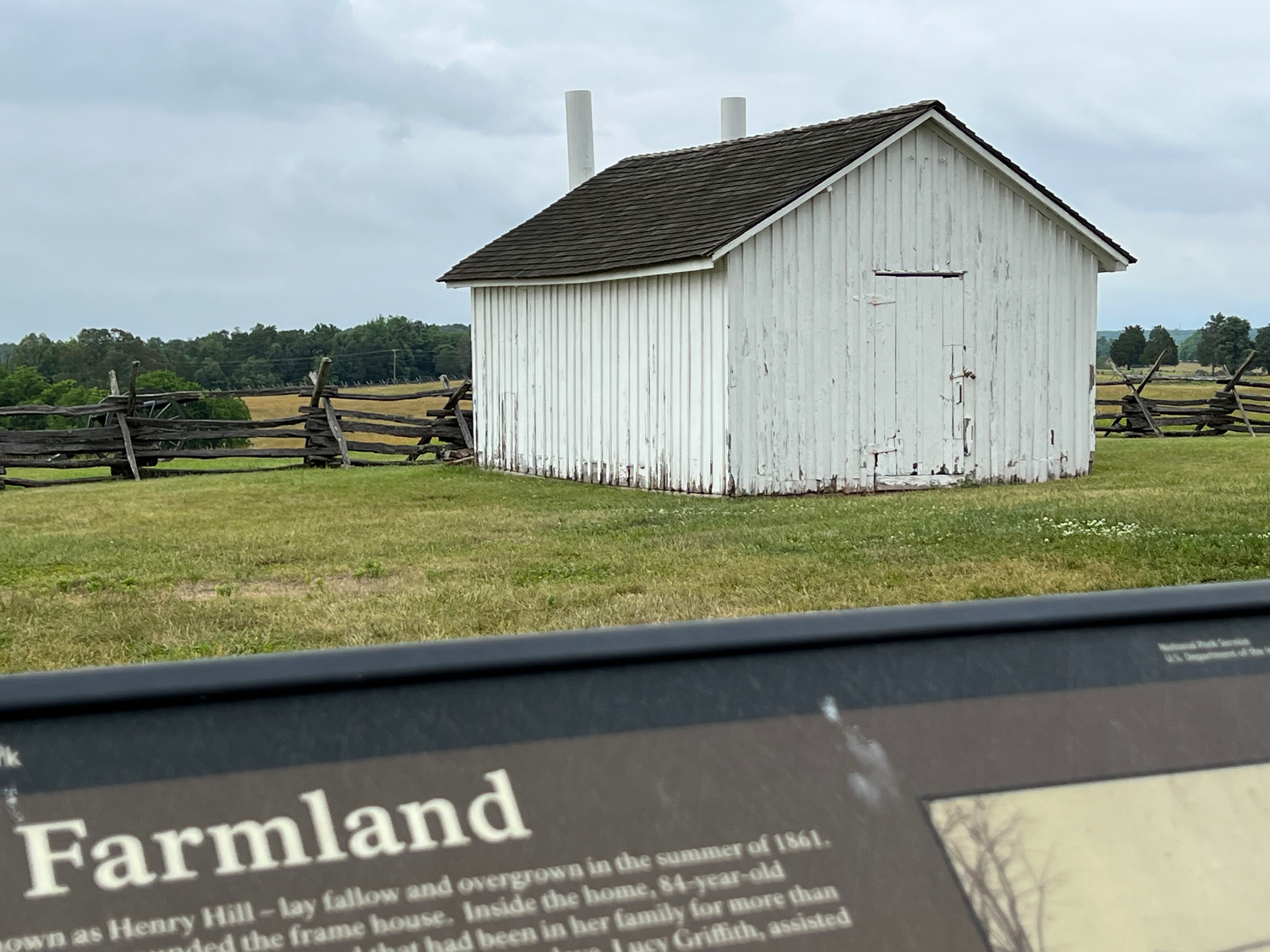
The fiercest fighting during the battle of Franklin (November 30, 1864) centered around the home of Fountain Branch Carter (see above), looking East. Hundreds of wounded and dead could be seen from the porch after the battle. Many of those – Confederate soldiers – would eventually be interred at McGavock cemetery close by.

http://farm3.static.flickr.com/2493/4099999981_1f02a83823_o.jpg

George C. Patterson, 72nd Illinois Infantry

George C. Patterson was from Harrison, Illinois when he enlisted on August 9, 1862, as a Private. He mustered into Company B of the 72nd Illinois Infantry on August 21st. Patterson was killed at Franklin on November 30, 1864.

American Civil War Database lists at least 16 72nd Illinois men having been killed at Franklin. The Union Army, Vol. 3 says, “in the fight at Franklin it lost 9 officers of our 16 engaged, and 152 men, who were either killed or severely wounded.”

The 72nd Illinois was part of Strickland’s Brigade [72nd Illinois, 44th Missouri, 50th Ohio, and the 183rd Ohio] at Franklin. The 72nd was placed just to the left (west) of the 50th Ohio which was buttressed up against the Columbia Pike about 50 yards in front of the Carter House.

My Google Map  www.FranklinBattlefield.com shows the position of the 72nd Illinois in relation to the other brigades around the Carter House.

J. A. SEXTON, Capt., Seventy-second Illinois Volunteer, Cmdg. Regt. wrote the following about the action at Franklin involving the 72nd Illinois.

At about 7 a.m. reached Franklin, the brigade taking position on the right of the road and commenced fortifying the left of the Fiftieth Ohio resting on the Franklin pike, the Seventy-second Illinois being on the right of the Fiftieth Ohio. Were at work on the fortifications at the time the enemy made their first assault. About 4 p.m. two divisions of the Fourth Corps, being in front of the works gave way on the approach of the enemy and rushed pell-mell into our works. At the same time the support on our left gave way, and the flank of our regiment being turned, the four left companies fell back, and as our right flank also became exposed to the enemy, the remaining companies were also ordered to retire to the second line of works, which was done. At that time, all of our field officers being wounded, I, being the senior captain, took command of the regiment, and a charge was ordered to recover our first position. In the charge all of our color guard, consisting of 1 sergeant and 8 corporals were shot down, and the night being so dark it was not perceived that our colors, which had been shot to shreds, were missing. An attempt was made to regain the colors, which was unsuccessful. The regiment was ordered to retire by Col. Strickland, commanding brigade at about midnight.

For more info on the 72nd Illinois see:

72nd Illinois, “War Diary [1862-1865] of Joseph Stockton of the Seventy-Second Illinois Volunteer Regiment Board of Trade Regiment),” by Brevet Brigadier General Joseph Stockton,  First Lieutenant, Captain, Major and Lieutenant-Colonel of the 72nd Illinois Regiment.

The Homestead Manor Plantation restaurant will open the weekend of November 14-15th.

Today, Homestead Manor Plantation sits amid 50 acres preserved by a conservation easement through The Land Trust of Tennessee. It will be the centerpiece of The Thompson’s Station Battlefield Park, which will feature walking trails and signage commemorating the 1,800 casualties of Civil War battle.

The restaurant will be open Tuesday through Saturday. This historic home offers a Civil War period setting for lunch, tea and special events unlike anywhere else in Middle Tennessee. Offering a seasonal selection of Southern favorite soups, salads, sandwiches, entrees and desserts from 11 a.m. til 3:00 p.m.

Tea is served from 11 a.m. til 4:00 p.m. Choose from 100 varieties of Loose Leaf Teas, served with tea sandwiches or a light meal with desserts.

Nestled along Columbia Pike in the heart of the Thompson’s Station, Tennessee is Homestead Manor Plantation, a place that harkens back to an era of Southern hospitality. Open Tuesday through Saturday, this historic home offers a Civil War period setting for lunch, tea and special events unlike anywhere else in Middle Tennessee.

4683 Columbia Pike • Thompson’s Station, TN 37179 • Ph. 615-790-2309 • info@homesteadmanor.com

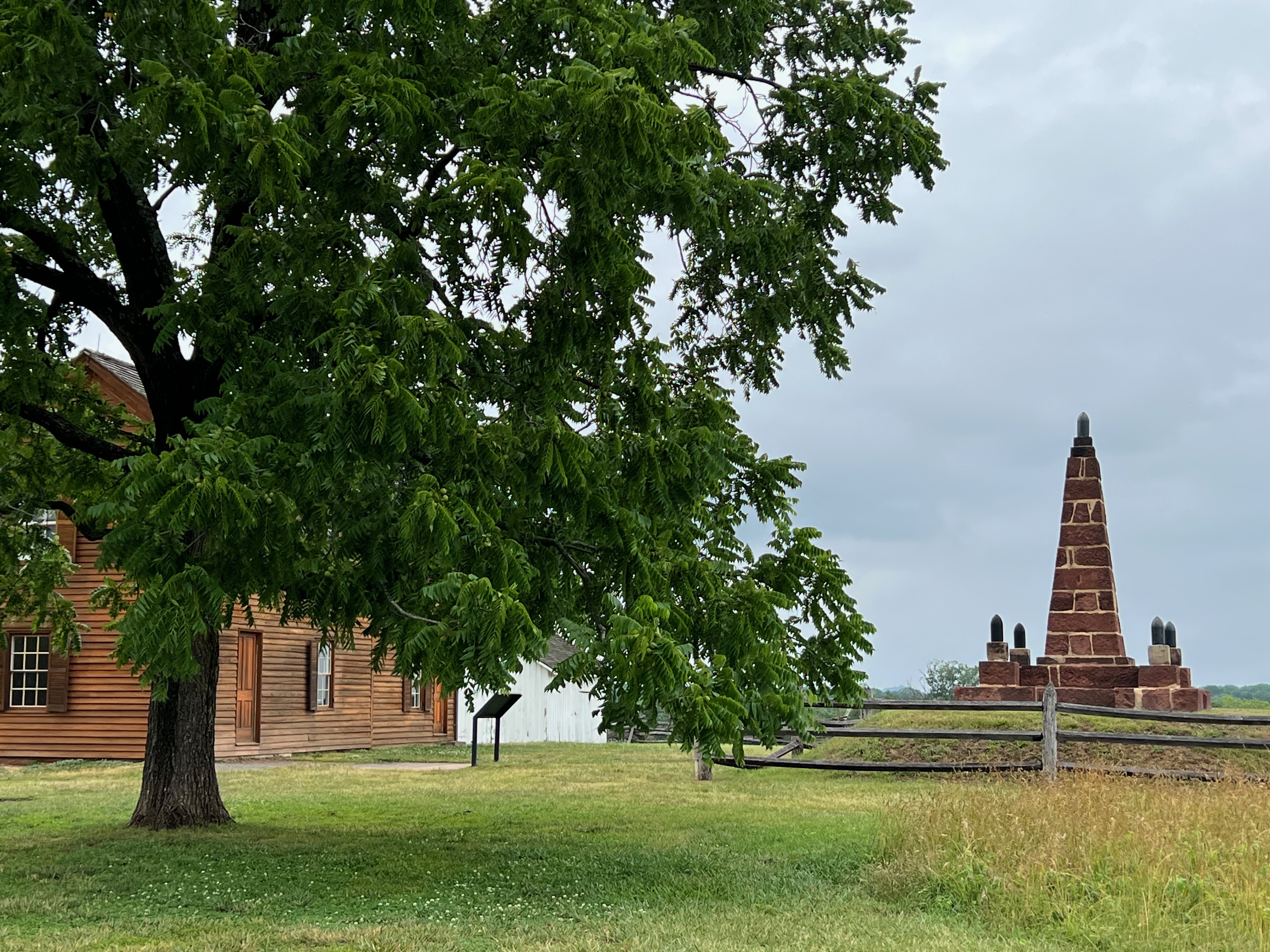
About 30-35 people assembled on the grounds of the Homestead Manor today to enjoy a first-class tour led by none other than our own Thomas Cartwright. The manor home was located at ground zero during the battle (March 4-5, 1863) and served afterward as a Confederate field hospital.

Here are some pictures from today’s tour. Check out the full gallery of photos here.

Thomas Cartwright led the tour. He is working on a book on the battle.

Homestead Manor

Prime battlefield land behind Homestead, looking north toward the position of the 85th and 33rd Indiana regiments.

It was a perfect day (mid-60s) for the tour today.

The National Park Service says this about the action:

In a period of relative inactivity following the Battle of Stones River, a reinforced Union infantry brigade, under Col. John Coburn, left Franklin to reconnoiter south toward Columbia. Four miles from Spring Hill, Coburn attacked with his right wing, a Confederate force composed of two regiments; he was repelled. Then, Maj. Gen. Van Dorn seized the initiative. Brig. Gen. W.H. “Red”  Jackson’s dismounted 2nd Division made a frontal attack, while Brig. Gen. Nathan Bedford Forrest’s division swept around Coburn’s left flank, and into his rear. After three attempts, characterized by hard fighting, Jackson carried the Union hilltop position as Forrest captured Coburn’s wagon train and blocked the road to Columbia in his rear. Out of ammunition and surrounded, Coburn surrendered. Union influence in Middle Tennessee subsided for a while.

This is a series of posts based on an interview with Williamson County historian Rick Warwick.

Earlier posts include:

Here is a link to contemporary photos of historic Franklin homes, many near downtown.

How many homes or structures exist in Franklin today that were here in 1864?

I count 28 or 29 in downtown Franklin and add two more if you include the Truett House and Jasmine Grove. then you could add Wyatt hall and Creekside inside the Mack Hatcher.

Your favorite antebellum home in Franklin or Williamson County: no longer standing?  Still standing?

Everbright , Westview and the McNutt House are no longer standing. Clouston Hall and Carter House in Franklin.

Sources: Rick Warwick, Williamson County Historical Society

http://farm4.static.flickr.com/3238/2316586361_45bf23fdfe.jpg

Click to see larger map

I recently emailed historian and author Wiley Sword to see if he’d like to weigh in on the current discussion regarding Hood’s blunder-failure at Franklin.  He offered this commentary.

Confederacys Last HurrahThere are a variety of modern viewpoints involving Gen. John Bell Hood’s performance at Spring Hill and Franklin,and there often is some merit with each opinion. On the positive side, Hood was a physically brave soldier, had a burning desire to succeed, and planned his operations on the basis of his considerable experience in combat.

From a negative perspective, Hood was not very adaptive of the innovation required in confronting a new era in the methodology of war, his stubborn nature disallowed constructive criticism , and being prone to blame others he could not accept responsibility for his mistakes. This led, in my opinion, to the ultimate disaster to his army at Franklin. Based upon my extensive research for my book Embrace an Angry Wind, Hood’s greatest critics were his own soldiers. Anyone wishing to explore this aspect should look at the sources listed in my book for each statement, which is based on contemporaneously written materials, not some “Lost Cause” postwar musings.

Hood at Franklin is perhaps best put into perspective by a modern observer asking himself: If I were a member of Hood’s army at Franklin, what would I think; would I willingly go; would I like my chances of surviving?

Or, would I rather have the likes of Robert E. Lee, Pat Cleburne, or Nathan Bedford Forrest calling the shots as to fighting that battle?

There are a variety of modern viewpoints involving Gen. John Bell Hood’s performance at Spring Hill and Franklin,

and there often is some merit with each opinion. On the positive side, Hood was a physically brave soldier, had a

burning desire to succeed, and planned his operations on the basis of his considerable experience in combat.

From a negative perspective, Hood was not very adaptive of the innovation required in confronting a new era

in the methodology of war, his stubborn nature disallowed constructive criticism , and being prone to blame others

he could not accept responsibility for his mistakes. This led, in my opinion, to the ultimate disaster to his army at

Franklin. Based upon my extensive research for my book Embrace an Angry Wind, Hood’s greatest critics were his

own soldiers. Anyone wishing to explore this aspect should look at the sources listed in my book for each statement,

which is based on contemporaneously written materials, not some “Lost Cause” postwar musings.

Hood at Franklin is perhaps best put into perspective by a modern observer asking himself: If I were a member

of Hood’s army at Franklin, what would I think; would I willingly go; would I like my chances of surviving?

Or, would I rather have the likes of Robert E. Lee, Pat Cleburne, or Nathan Bedford Forrest calling the shots

as to fighting that battle?

Dr. Woodworth is Professor of History at T.C.U.

On a recent post — Hood’s blunder-failure at Franklin? — Professor Steven E. Woodworth left this comment on Hood’s failure at Franklin. I think it worthwhile to bring it to our attention as a separate post.

A case can be made in defense of Hood’s battle plans at Atlanta, though not his execution of those plans. Such is not the case at Franklin. It’s true that frontal attacks were sometimes necessary and sometimes successful. It’s also true that every truly great Civil War general launched one or two such attacks that he would no doubt have liked to have taken back afterward but that seemed reasonable when he launched them. Yet there simply can be no palliation or excuse for Hood’s Franklin assault. it did not seem at all reasonable when he launched it. By that point in the war, the simplest drummer boy could see that it could not succeed and would lead to the slaughter of the army. Bad as Hood’s situation was, wrecking his army could only make it worse. His only reasonable option was to maneuver in such a way as to maintain his army, since it was one of the Confederacy’s last assets.

Dr. Woodworth has authored many respectable and industry-leading books on the Civil War: see his Amazon.com list.

KNight_44742136The History Press is publishing a series of books called “Civil War: Sesquicentennial Series”. History Press just published a volume on Franklin by  James R. Knight, aptly titled “The Battle of Franklin“.

The books in this series are not known for breaking new ground when it comes to understanding or interpreting a battle. Rather, the chief value of this book is that it is short enough to allow the reader to get through it in a few hours and it exposes the reader to the bare essentials.

I always enjoy the pictures, maps and narrative layout of these books.

Over years past, I have posted numerous profiles on various soldiers who fought at Franklin. Most of the profiles include a period photo or image of the soldier(s) profiled.

Union

CSA

If you enjoy learning about battles by studying maps then you’re going to really like the new Battle of Franklin animated map created by the CWPT.

The map is developed using Flash technology and is divided into four major sections: (1) Hood invades Tennessee, (2) the Affair at Spring Hill, (3) the Battle of Franklin, and (4) Preservation of the Battlefield.

The Franklin animated map is the sixth map the CWPT has created, including ones on Fredericksburg, Saving Bentonville, First Day at Chancelorsville, Chantilly and Cedar Creek.

CWPT’s Rob Shenk is the creative hand behind these superb web-based resources. Steve Stanley is the cartographer and flash animator. Carnton historian Eric Jacobson consulted with Shenk on the Franklin map.

The Battle of Franklin animated map incorporates these features:

a. Once the play button is clicked, the map auto-forwards through the slide show.

b. Period-authentic and contemporary photos are used.

c. Text-narration (not audio) is provided throughout.

d. Troop movements are simulated through use of forward and retreating lines and markers for brigades.

e. As troop movements are simulated one can also see the time-line advance (at the top). The user can click on a specific time-stamp on the time-line and the map will advance to the point in time of battle.

f. Regiment markers are keyed to the respective name of the Brigade it belongs to.

g. Artillery-piece markers are keyed to the number of pieces in that unit-placement.

h. If land has been preserved by private orgs or the CWPT, lines are drawn to illustrate land saved.

i. Each map is part of a larger section with an abundance of info about that battle (see: Franklin)

Check out The Battle of Franklin animated map .

I interviewed Rob Shenk ay CWPT about their animated maps.

1. How do you select what battlefield to animate?

CWPT’s Directors and I regularly meet to discuss which animated map projects make the most sense going forward.  We typically choose map projects based on the following criteria:

A.  Is there much natural interest in the battle or subject?

Not only is it important that we put our scarce resources against the larger battles which changed the course of the American Civil War, but those battles also tend to have a larger, pre-existing base of interested fans.  We hope that our animated maps not only educate the viewer, but also acquaint a larger audience with who the Civil War Preservation Trust is and what we do.

B.  Is there a relevant or interesting preservation angle to the subject?

Most of our animated maps feature battlefields where CWPT or other preservation organizations have saved significant sections of the battlefield.  By showing how the fighting  coursed over and through these battlefields we can help to increase the public’s awareness of the importance of the land that we seek to save.

C.  Do we have access to accurate time-phased maps of the battle?

Creating an accurate animated map requires that you have detailed time-phased information on how the various units fought and moved at the battle.  Therefore it’s critical that we locate pre-existing time-phased maps and/or work with battlefield experts who have that knowledge.  Unfortunately, not every battle that we would like to tackle has this level of information.

D.  Does the battle have an interesting tactical flow to it?

As you might imagine, animated maps tend to be much more exciting when there is much more movement and action.  Grand, sweeping tactical movements are much more captivating than static sieges as a for-instance.

2. How long did it take to make the Franklin map(s)?

Longer than we would have hoped!  Our Franklin Animated Map project took us roughly 4 months to produce.   Sometimes scripting the complex unit movements takes the longest amount of time.  In other projects the basic historical research can be the long pole in the tent.  Fortunately for this Franklin Animated Map project, Eric Jacobson played an integral role in providing us with detailed troop movements and other historical information. I’m not sure how we could have done this Franklin map without him.

3. How much assistance do you rely on outside of your own resources to create a map?

Outside assistance is almost always a necessity.  CWPT, despite being the largest Civil War battlefield preservation organization in the United States , is still very modestly staffed.  First and foremost, we rely upon the talents of Steve Stanley, who is our crack CWPT cartographer and battlefield animator.  Secondly, we usually require the input and guidance of historians who have a detailed knowledge of the subject battlefield.  Throw in some proof reading, web page production, and photo editing and…. Voila!

4. What are 2-3 features of these animated maps that users seem to like the most?

What we tend to hear most from viewers is that they greatly appreciate seeing the precise tactical actions of the various units – to see all the units in action at one time can be very illuminating.  Many viewers will tell us that despite having an in-depth book-level understanding of the subject, that their understanding of the battle was greatly improved by watching the animation.

What we are finding is that many of us are truly “visual learners” and when we can see how the battle ebbed and flowed we are more likely to have an improved understanding of that battle.   In the past, animation like this was available via the celebrated electric maps, such as the one that inhabited the Gettysburg Visitor Center for many years.  Our animated maps strive to be the 21st century version of those great lighted offerings.  But unlike those visitor center electric maps, our animated maps can be viewed from anyplace in the world where you have an internet connection.  We do know that schools, the military, and various round tables have used our maps as a teaching aid.  That kind of news really excites us.

One other feature that I love is the ability to toggle between the topographical map and a modern satellite overhead view.  Having a chance to see the battlefield landscape as it exists today can produce a powerful reaction with the preservation-minded viewer.   You can see this dichotomy – between the historic battlefield and its modern incarnation – most clearly in our Battle of Chantilly map.  After watching the Union attack through the farms and fields of Chantilly , you can then watch that same tactical action as the attacks pour over modern townhouses, parking lots, and highways.  In some of our map offerings you can also toggle to an early aerial overhead – an in-between view of the battlefield.   Unfortunately we do not have this “Now and Then” type toggle for our Franklin Animated Map, but we intend to add that in soon.

5. How many more maps are slated for launch in 2010 and on what battles?

We are right now discussing a number of potential animated map projects.  We would definitely like to do an animated map offering focused on the Seven Days Campaign outside of Richmond , Virginia .  We are also looking at other Western Theater battlefields of interest and will likely develop an animation offering focused on some segment of the Gettysburg battlefield in the not too distant future.

Who were some of the prominent family names in Franklin (c. 1864)?

McEwen, Ewing, Clouston, Wooldridge, Figures, Marshall, Carter, McGavock, Bostick, McNutt, Perkins, Park, Hanner

Who was the mayor of Franklin in 1864?

Probably John B. McEwen. He was in 1861, ‘62 , ‘63.

Source: Rick Warwick, Williamson County Historical Society

Residence was not listed;
Enlisted on 2/25/1864 as a Captain.
On 2/25/1864 he was commissioned into “F” Co. TN 10th Cavalry
He was Mustered Out on 8/1/1865
Sources used by Historical Data Systems, Inc.:
10th Tennessee Cavalry History
Tenth Cavalry. — Lieut.-Cols., George W. Bridges, James T. Abernathy; Majs., John Parr, John Elliott, William P. Story, Sterling Hambright.
The organization of this regiment was begun at Nashville under the supervision of Col. Bridges.  Cos. A, B, C, D, E, H and I were organized during the fall of 1863 and in the winter of 1864, and after having been organized into a regiment were attached to the command of Col. George Spalding, 2nd brigade, 4th division of cavalry.
During the summer and fall of 1864 it was engaged in arduous duty in Tennessee.  About the close of the year it was sent to northern Alabama to watch the move meets of Hood’s army, and had an engagement with a largely superior force at Florence. Overpowered by numbers it was compelled to fall back to Nashville, where it was transferred to Gen. Hatch’s command and participated in the numerous engagements attending Hood’s raid into Tennessee.
On the first day’s battle before Nashville it lost 70 officers and men.  The leader, Maj. Story, was badly wounded, and the command devolved upon Maj. Abernathy.  At the close of the campaign the regiment was sent to New Orleans, where it remained until June 10, 1865.
Cos. F and G were not organized until Feb., 1865.  Co. K was organized in June, 1865.  Co. L was never fully organized.  It numbered 51 men, and was stationed as a guard on the Nashville & Northwestern railroad.
Sixty-three men comprising Co. M were mustered into service in Oct. 1864, under William H. Tampton as first lieutenant.  They served during the campaign against Hood as provost guard and escort company.
Co. A was detached from its regiment on April 26, 1864, and assigned to duty at Springfield, Tenn., where it remained until August, after which it was with Gen. Gillem in his campaign in East Tennessee.
The regiment was mustered out Aug. 1, 1865, in accordance with orders from the war department.
Franklin’s adopted Civil War son, Harold Becker, turns 92 today. You will recall his father, Charles Conrad Becker, fought in the 128th Indiana at Franklin. I’ve blogged on Harold and the reburial event we had recently many times before.

Funny story . . . Harold told me he was born on October 30th and his brother was born November 1st. For years his mother always celebrated BOTH their birthdays on Halloween, October 31st. He told me he was much older before he even realized his birthday was actually on October 30th!

Civil War sons James Brown, Sr. and Haorld Becker

Picture courtesy of Al Wagner Photography.

My wife and I were honored to host a dinner on Friday, October 10th with our special guests of honor. Harold Becker (91) is the son of Civil War veteran Charles Conrad Becker, who served with the 128th Indiana Infantry and fought at Franklin. James Brown, Sr., is the son of James H.H. Brown who served with the 8th Georgia Infantry, and fought at Gettysburg.

Mr. Becker and Mr. Brown have attended Civil War reunions and events for seventy years but until October 10th had NEVER met a Civil War son who fought for “the other side”.

The Civil War News covered the story.

Blog Author

Kraig McNutt is the author and publisher of this blog. Email him.

Join our Facebook Community

Become a Fan and join the Battle of Franklin Facebook group.

Take Our New Poll

Have you read it yet?

Learn about McGavock Confederate Cemetery

Unknown Civil War soldier stories here

Click HERE to see all of the blog posts related to the unknown Franklin Civil War soldier.

We proudly support Franklin’s Charge


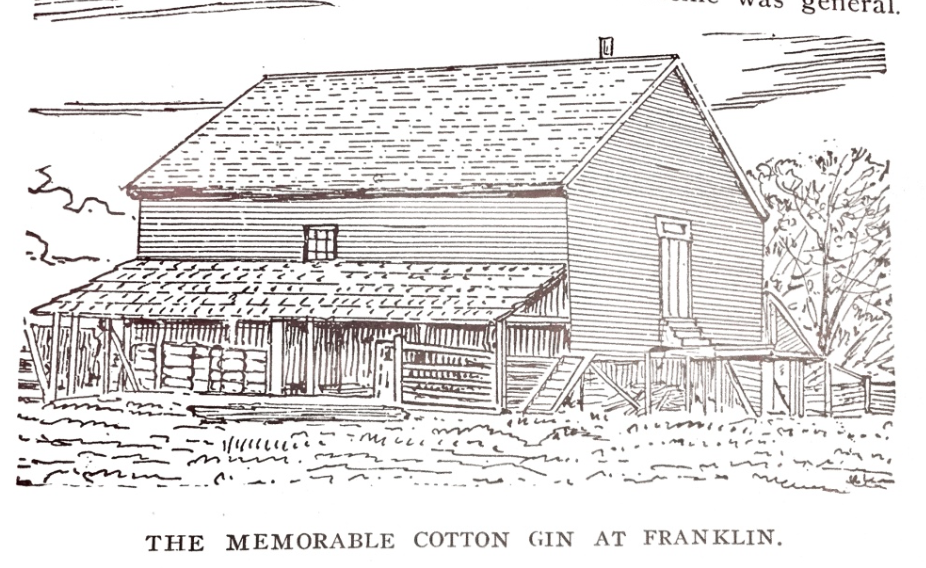
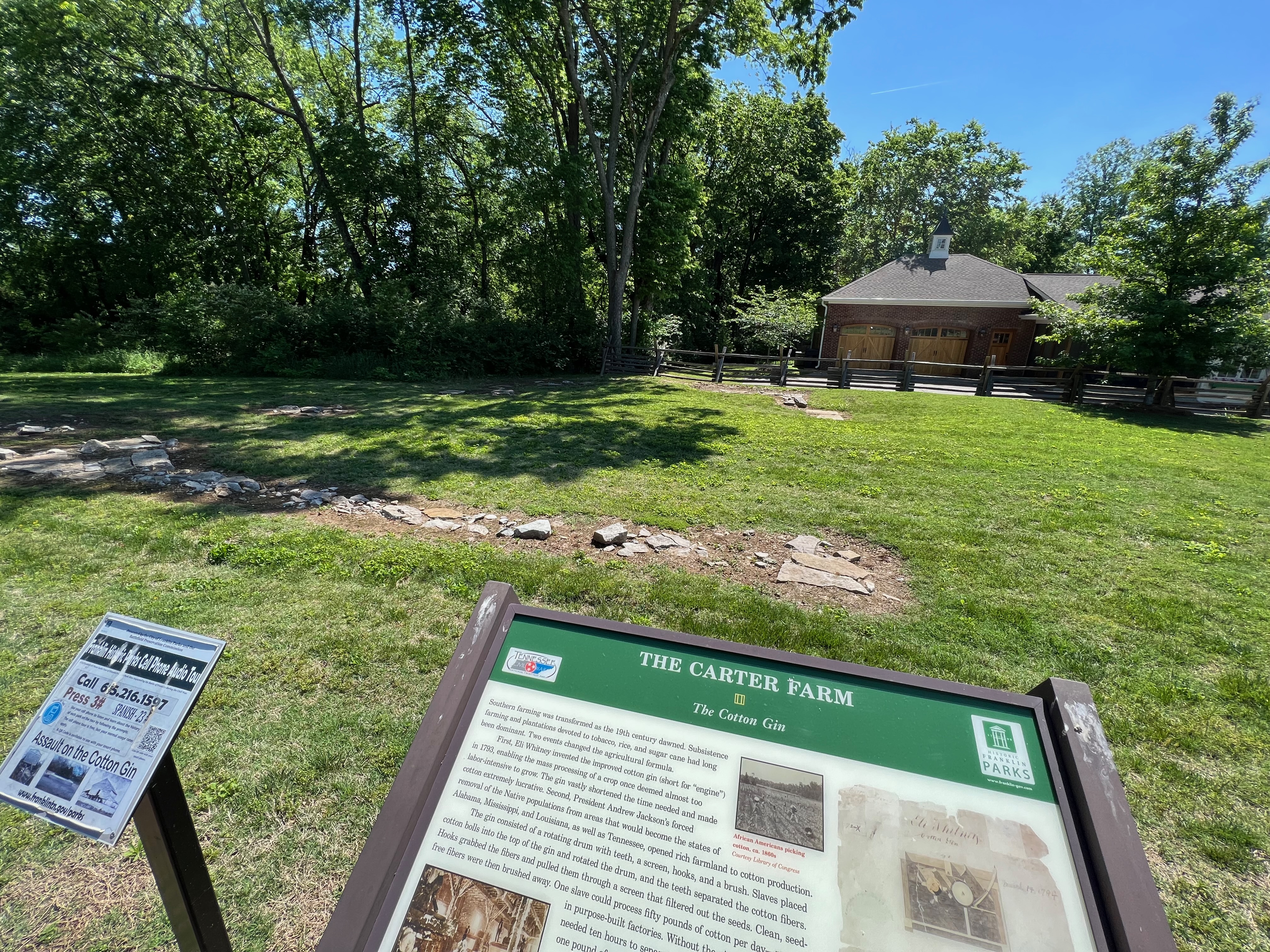
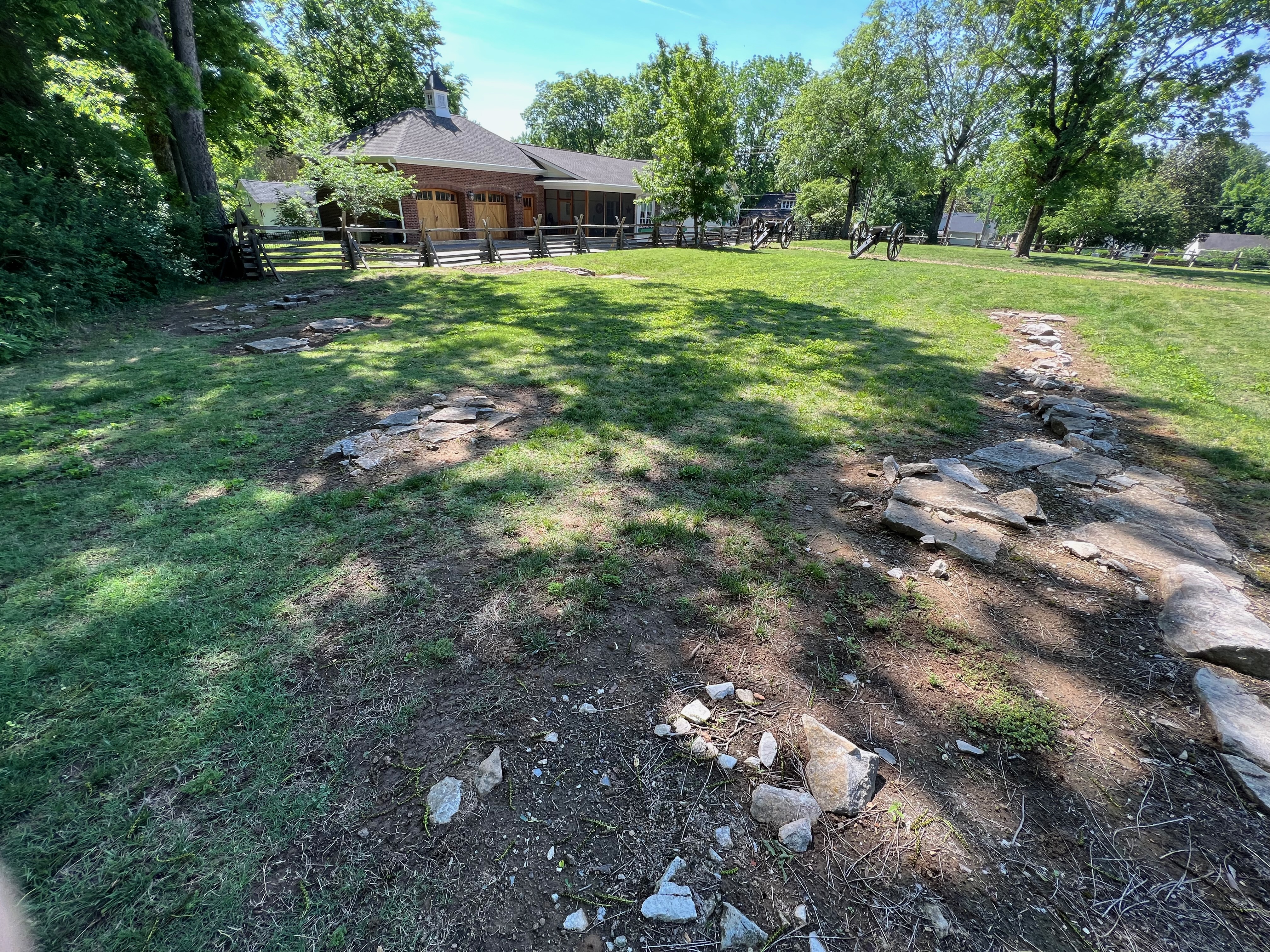
Learn about and support the Cotton Gin campaign!

Browse previous posts

A Franklin Civil War Museum?

Should Franklin have a world-class Civil War museum? Join in the discussion.

Archives

Blog Stats

  • 133,299 hits

Summary of the Battle of Franklin

The Battle of Franklin was fought on November 30, 1864 in Franklin, Tennessee; in Williamson County. John Bell Hood's Army of Tennessee (around 33,000 men) faced off with John M. Schofield's Army of the Ohio and the Cumberland (around 30,000 men). Often cited as "the bloodiest five hours" during the American Civil War, the Confederates lost between 6,500 - 7,500 men, with 1,750 dead. The Federals lost around 2,000 - 2,500 men, with just 250 or less killed. Hood lost 30,000 men in just six months (from July 1864 until December 15). The Battle of Franklin was fought mostly at night. Several Confederate Generals were killed, including Patrick Cleburne, and the Rebels also lost 50% of their field commanders. Hood would limp into Nashville two weeks later before suffering his final defeat before retreating to Pulaski in mid December. Hundreds of wounded Confederate soldiers were taken to the John and Carrie McGavock home - Carnton - after the battle. She became known as the Widow of the South. The McGavock's eventually donated two acres to inter the Confederate dead. Almost 1,500 Rebel soldiers are buried in McGavock Confederate Cemetery, just in view of the Carnton house.